
Reforestation &
Forestry Consultation
Services & Consultation Options
-
Timber Cruising & Fair-Market Timber Valuation
At Seventh Sister LLC, we provide professional timber cruising and fair-market timber valuation services for estate settlement, probate administration, trust management, tax reporting, timberland transfers, and long-term forest asset planning. Our valuations are prepared using industry-recognized forestry methods and may support documentation required under Idaho Code § 15-3-706.
Each valuation combines field-based timber inventory, merchantable volume estimation, defect analysis, operability assessment, and current-market stumpage analysis to determine the estimated fair market value of standing timber.
What You'll Receive
Every valuation package includes:
A professional Timber Valuation Report
Stand-level inventory and timber volume calculations
Species, product, and defect summaries
Fair-market stumpage valuation analysis
GIS maps showing property boundaries, stands, cruise plots, and access features
Cruise summary tables and inventory data
Field photographs and supporting documentation
A formal Fair-Market Valuation Statement
Common Uses
Our timber valuation reports are commonly used for:
Probate and estate administration
Trust and inheritance matters
Estate and capital-gains tax documentation
Family succession planning
Timberland sales and ownership transfers
Forest asset evaluation and management decisions
Scope of Service
Our timber valuation services are intended to determine the fair market value of standing timber assets. Access conditions, terrain, and general harvest operability may be considered as factors affecting value; however, valuation services are limited to asset appraisal and documentation.
Standard timber valuation services do not include timber sale administration, logging plans, road design, harvest scheduling, detailed logging-cost estimates, silvicultural prescriptions, or forest management plans unless separately contracted.
-
Seventh Sister LLC provides planting and reforestation of native conifer and shrub species on bare ground, understocked stands, wildfire‑impacted areas, and single‑age forests in need of structural diversity. This service initiates new growth and establishes the foundation for long‑term forest resilience.
Planting plans are tailored to the landowner’s goals and to what the site can realistically support. Each project begins with an assessment of key site parameters—including soil composition, existing vegetation, aspect, moisture regime, and competitive pressure—to ensure that species selection and planting layout match both the desired outcome and the ecological capacity of the land.
Seventh Sister LLC procures all seedlings and planting stock, ensuring appropriate seed origin and proper handling. Seedlings are managed from pickup to cold storage to field deployment, maintaining vigor and reducing planting shock through careful transport, storage, and on‑site care.
The core service includes high‑quality planting performed to professional standards. Additional protection and enhancement measures can be added based on site needs and landowner preference, including:
Shade cards for moisture retention and reduced heat stress
Animal‑damage protection for vulnerable seedlings
Brush blankets as a small‑scale, non‑chemical alternative to herbicide
Bud capping where browse pressure is present
Microsite creation using woody debris
Strategic shrub planting for natural shade development
These enhancements are optional and most feasible on smaller parcels, where individualized care can make a meaningful difference.
-
Seventh Sister LLC provides fuel-reduction services designed to lower wildfire risk, improve stand health, and support successful reforestation. Treatments focus on pre‑commercial thinning, brushing, piling, and all of which reduce ladder fuels, open growing space, and decrease excessive stand density.
All fuel-reduction work is performed by a hand crew rather than machinery. Hand‑tool operations allow far greater maneuverability and precision, especially on slopes, rocky ground, or irregular terrain where equipment cannot safely or effectively operate. Hand crews can work around sensitive regeneration, legacy trees, wildlife habitat features, and wet areas without causing soil compaction or rutting. This approach minimizes disturbance, preserves microsite integrity, and ensures treatments are applied exactly where they are needed.
Brushing targets ladder fuels and overly competitive brush species that suppress young conifers and restrict regeneration. This work focuses on reducing fire‑prone vegetation and opening growing space for conifers and other desirable species.
Pre‑commercial thinning reduces overcrowding by removing excess stems, lowering competition for light, water, and nutrients. Thinning improves individual tree vigor, increases growth rates, and helps a stand progress toward desired future harvest efficiently.
All cut material is piled as part of the service, consolidating fuels. These treatments support healthier, more resilient forests by reducing hazardous fuels, improving growing conditions.
-
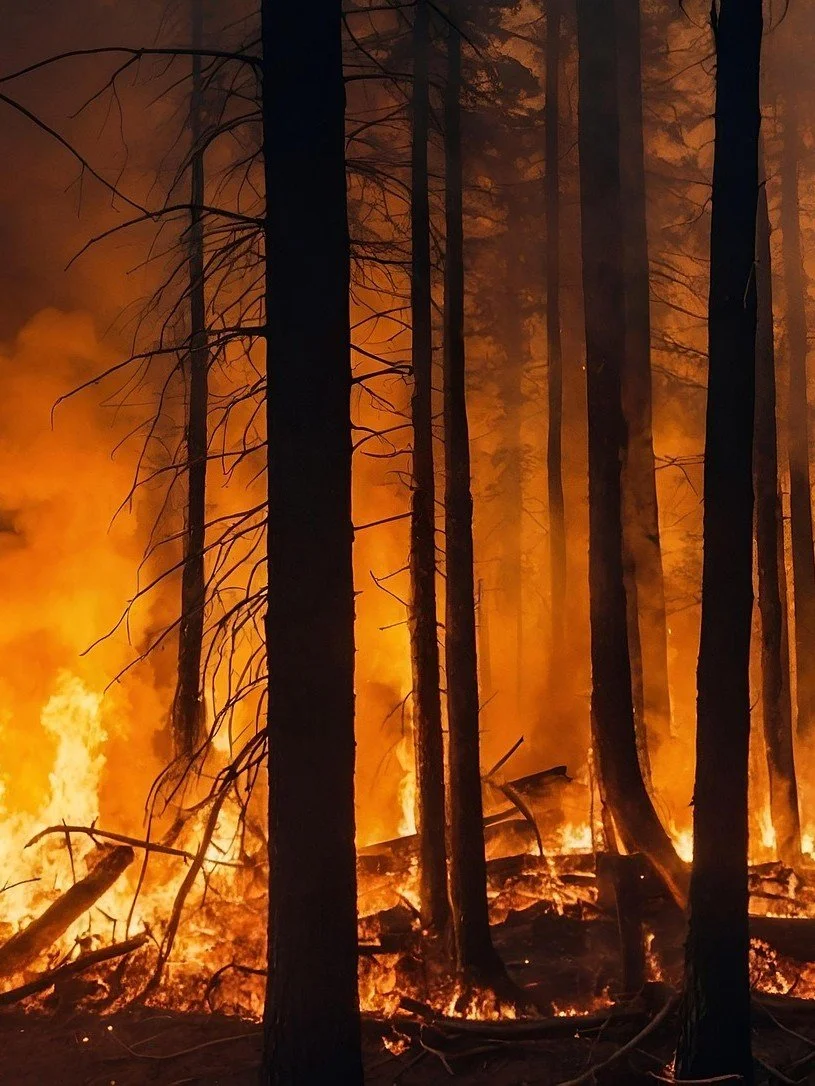
Seventh Sister LLC provides post‑wildfire reforestation prescriptions that help landowners understand burn impacts, evaluate regeneration potential, and select practical restoration treatments. This consultation and the resulting prescription plan are free, and each plan includes a quotation for any reforestation work recommended to implement the prescription.
The consultation focuses on assessing burn severity, identifying areas likely to regenerate naturally, and determining where active reforestation is needed. Before developing the prescription, I evaluate key site factors including vegetation competition, moisture stress, and browse pressure.
• Where vegetative competition is high, I determine whether small‑scale, non‑chemical treatments—such as brush blankets or targeted vegetation removal—are appropriate.
• On dry sites, I identify opportunities to improve microsite conditions through moisture‑retention and shading strategies. These may include artificial shade cards, native deciduous shrubs, or strategic use of residual woody debris to create shelter, moderate soil temperature, and improve moisture retention.
• If browse pressure is present, I assess whether protective measures—such as bud caps or other physical deterrents—are needed to prevent ungulate browse and ensure seedling survival.
Planting density is a central component of each prescription. Recommendations are based on field experience to support survival, meet future stand objectives, and reduce the likelihood of replanting or early thinning.
Each consultation includes an evaluation of post‑fire conditions—burn severity, vegetation response, soil exposure, and overall site resilience. From this assessment, I outline feasible restoration approaches and develop one tailored plan that reflects the landowner’s preferred direction.
Each plan includes:
• Evaluation of current post‑fire stand and site conditions
• Assessment of natural regeneration potential and reforestation need
• A detailed planting and treatment plan
• A cost quotation for reforestation services
-
Seventh Sister LLC provides silvicultural consultations that help landowners understand their forest’s current condition and explore practical, science‑based treatment options. Each consultation outlines several possible management approaches, but the final deliverable is one clear treatment plan based on the landowner’s chosen objectives. Every plan includes a course of action and a general timeline for when treatments should occur.
Each consultation includes an evaluation of existing stand conditions—species composition, density, age structure, health indicators, and competitive pressure. From this assessment, I present multiple treatment options the site can realistically support. After discussing the landowner’s goals, I develop one tailored treatment plan that reflects their preferred direction.
Each plan includes:
My evaluation of current stand conditions
Multiple treatment options for consideration
One recommended treatment plan based on the landowner’s selection
A general timeline for completing the proposed activities
While this service does not include a full timber cruise, defect estimate, or monetary valuation, I can provide general timber metrics such as basal area per acre and a rough estimate of standing board‑foot volume. These figures are for planning purposes only and are not suitable for commercial appraisal or sale.
Treatment plans may include:
Traditional single‑age rotation management, the most economical and profit‑maximizing option for landowners whose goals focus primarily on timber revenue
Non‑traditional or two‑aged approaches, which maintain structural diversity and wildlife benefits while still allowing for periodic harvest using contractors experienced in selective or partial‑cut operations
Recommendations and cost quotations for pre‑commercial thinning, brush reduction, or planting to meet long‑term goals
-
Idaho Timber Exemption (Timber Tax Program)
Idaho offers a Timber Exemption for private forest landowners who actively manage their timberland. This exemption allows qualifying parcels to be taxed based on forest productivity rather than full market value, significantly reducing annual property taxes for landowners who maintain their land as working forest.
The program is designed for owners who intend to keep their land in timber production and follow basic forest management practices. It applies to rural forest parcels that meet Idaho’s definition of forestland, and it requires the landowner to commit to long‑term timber use.
In short, I give you a complete, professional forestry package—planning, mapping, and active management—that supports your Timber Exemption application and makes the process straightforward for both you and your county assessor.
What You Must Do to Qualify
Apply with the county assessor The landowner submits the Timber Exemption application for qualifying parcels.
Demonstrate the land meets Idaho’s forestland criteria The parcel must have sufficient forest cover and be capable of producing commercial timber.
Commit to timber production The land must be used primarily for growing and harvesting trees.
Maintain the land as forestland Landowners must avoid converting the land to non‑forest uses.
Provide any required documentation Counties may request maps, descriptions, or management intent.
How Seventh Sister Can Assist You in This Process:
If you’re applying for the Idaho Timber Exemption to reduce your property taxes, I can provide the professional forestry documentation that helps your county assessor confirm your land qualifies as working forestland. My forest management plan service is the strongest support you can include with your application: it clearly describes your timber stands, species composition, stocking levels, and overall forest productivity, giving the assessor confidence that your land meets Idaho’s forestland criteria. The plan also outlines your long‑term management intent—your commitment to growing and harvesting timber—which is a key requirement for maintaining the exemption.
Beyond planning, I provide the active management work that demonstrates your land is being cared for as a functioning forest. Treatments such as brushing, precommercial thinning, slash cleanup, and reforestation show that stewardship is happening on the ground, reinforcing your eligibility and helping you maintain the exemption year after year. I also supply clear maps, stand boundaries, and treatment documentation so the assessor can easily verify forest cover and understand how your land is being managed.
-
Seventh Sister LLC provides professional tree‑climbing services for cone collection in both orchard settings and woods‑run stands. We contract directly for cone‑collection work and perform climbing and collection according to the timing and specifications provided by the contracting entity.
We use low‑impact climbing methods appropriate for conifer species and avoid practices that damage bark or cambium. Cones are collected directly from the crown and handled using proper seed‑collection and transport procedures to maintain viability and meet contract requirements.
Our cone‑collection services include:
• Orchard cone collection using low‑impact climbing techniques and contract‑specified timing.
• Woods‑run cone collection from designated stands, following agency or corporate instructions for collection windows and species.
• Whitebark pine cone caging to support conservation and restoration programs. Cages are installed to protect developing cones from wildlife until the scheduled collection period. • Proper seed handling from crown removal through storage and delivery, ensuring clean, traceable, and contract‑compliant seed lots.
Residual woody debris may be used on‑site when appropriate to facilitate safe climbing access or staging, depending on contract requirements and site conditions.
Seventh Sister LLC provides reliable, professional climbing and cone‑collection operations that meet contract specifications, safety standards, and seed‑handling requirements. A cost quotation is provided for all climbing, caging, and collection work requested.
-
All services begin with a written quote outlining the anticipated scope, acreage, materials, and labor. Once the landowner approves the quote, a formal contract is issued to document responsibilities, timelines, and deliverables and to offer legal protection to all parties. For services requiring materials and labor—such as planting —clients provide the full cost of materials and 50% of the labor as a down payment, with the remaining labor balance due after services are completed.
Silvicultural plans, and tax reduction services are offered on a cost‑per‑acre rate of $35/ acre —with 50% due on the day of the field evaluation and the remaining 50% due upon delivery of the final documents.

Mission: Land Management by the People for the People
To do right by the land and the creatures that depend on it.
Seventh Sister LLC provides science‑informed reforestation services for state, local, and private landowners. We welcome projects on small‑acreage parcels, and we hire locally to support the communities we serve.
My background includes a four‑year degree in forestry, ongoing graduate research, and silvicultural experience through the U.S. Forest Service. Combined with extensive field experience in large‑scale post‑harvest and post‑wildfire reforestation - this foundation shapes every prescription and treatment plan I develop.
I manage land according to the values, ethic, and long‑term goals of each landowner. Whether the vision centers on industrial rotation, wildlife habitat, or the stewardship of a sacred space, each plan is tailored to reflect the owner’s relationship with their forest.
Across all projects, my focus is ecological resilience and work that does right by the land and the people who depend on it.